One of the things that has impressed me most about Dev Bootcamp is not only the content of their educational philosophy, but also its application. Ideas around collaborative teamwork, experimentation and co-creation are thrown around a lot, but not always realized in practice.
My educational philosophy has been informed by many forces, not least among these my own experience as a student, and most recently by my wife, Allison, and her work building summer programs for students at Davidson College through her role as Director of Special Projects in the president's office. I see a lot of the values she designs into her programs reflected at Dev Bootcamp. Let's look at an example.
Education scholars is an immersive 10 week summer program that places ~10 Davidson students in rigorous project-based internships with different stakeholders in the Charlotte-Mecklenburg education system (CMS). Students also live together and do weekly enrichment activities as a group, whether that's listening to the superintendent of CMS talk about local education issues or traveling to DC to hear policy makers talk about the national educational agenda.
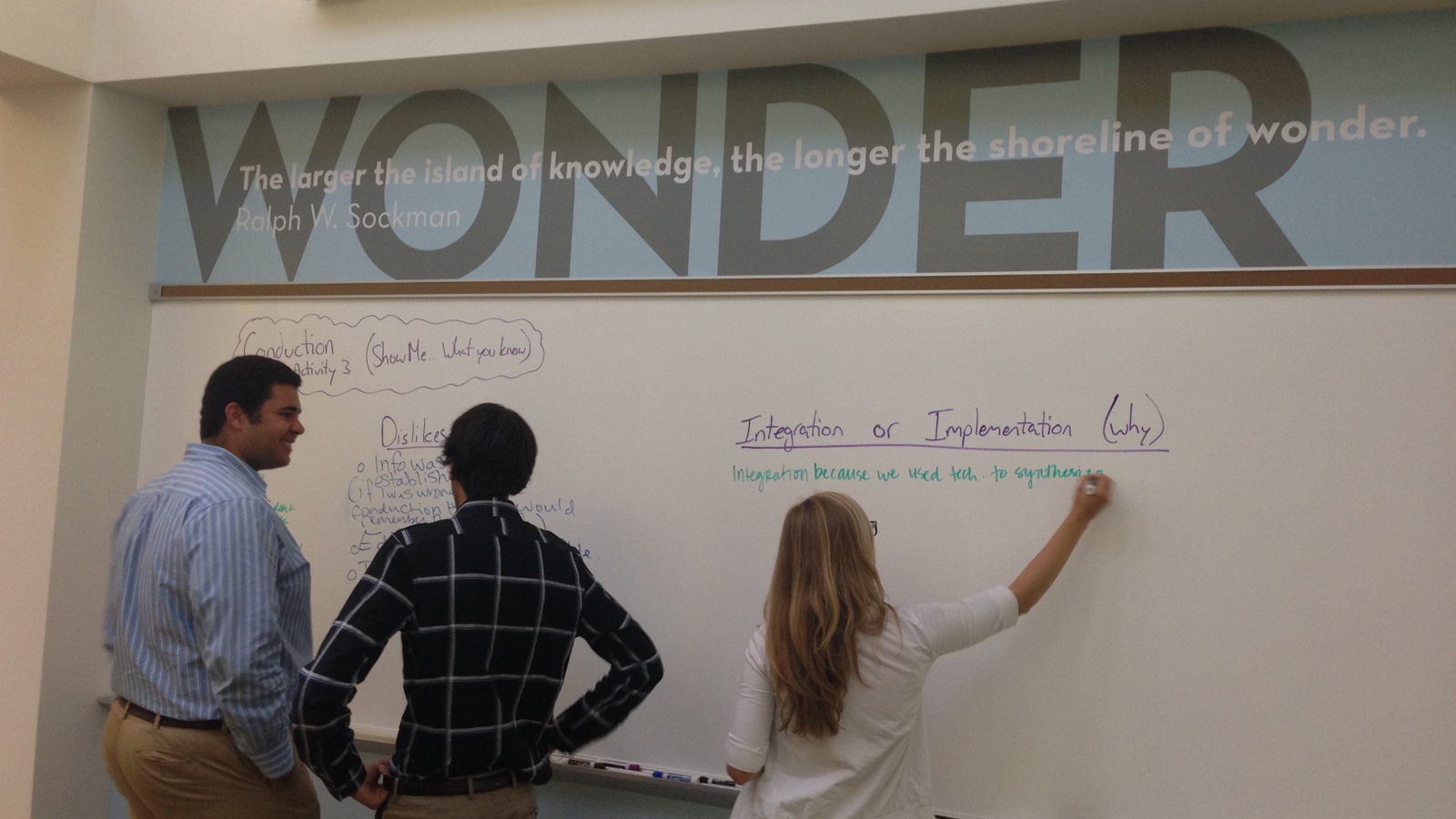 Edscholars at work
Reflection is absolutely key to the scholars' experience and built into every aspect of the program. Whether at weekly meetings, after enrichment sessions or through the capstone presentation at the program's end, reflection is everywhere. The students also create and manage their own blog and constantly exchange ideas, stories with both their cohort and broader communities (sound familiar Bootcampers?).
The program has only been around for two summers and, much like Dev Bootcamp, is still a work in progress. Students are invited to be co-creators, who actively engage in shaping what the program looks like by giving feedback on every aspect of the program.
The parallels continue. Often times academic institutions worry that real learning won't take place if it happens too close to the "real world". The argument is that attending something like Dev Bootcamp focuses too narrowly on specific skills and not generally enough on learning in some traditional sense. And there are merits to such an argument. But what I've seen from Education Scholars and Dev Bootcampers is that the engagement with the "real world" gives student authentic experiences that allow them to ask their own questions, ones they feel intrinsically motivated to answer.
And intrinsic motivation is key. Perhaps the most important thing any "education" can hope to deliver. If Dev Bootcamp and Education Scholars are helping to teach students how to develop and apply intrinsic motivation, I think they are showing at least part of the solution to many of the issues faced by traditional educational institutions including high drop out rates.
In summary, it's been fascinating to see parallels between these two programs. Of course my time at Dev Bootcamp has only just begun, but I look forward to taking part in a grand experiment of what education can look like at its best. What these two programs have built is by no means perfect, but I think we're on the right track.